Women's Padded Cycling Underwear: How to Choose the Right Pair
Women's padded cycling underwear is a close-fitting pair of knickers or short-leg briefs with a soft pad sewn into the gusset, made to be worn under your everyday clothes or loose shorts instead of full Lycra cycling shorts. A pad shaped for the female body supports your sit bones, keeps seams away from sensitive skin and moves sweat away, which can make anything from a 20-minute commute to a long weekend ride more comfortable. The three things to get right are the cut, the pad and the size, and you wear it with nothing underneath.
What padded cycling knickers actually do
When you sit on a saddle, most of your weight rests on two small points, your sit bones, with the soft tissue in between taking the rest. Ordinary cotton knickers were never designed for that. Their seams sit exactly where you press down, the fabric soaks up sweat and stays damp, and the material bunches as you pedal. Many riders find that this combination of pressure, moisture and friction is what turns a pleasant ride into a sore one.
Padded cycling underwear tackles all three at once:
- The pad spreads the load over a larger area and cushions road vibration.
- Technical fabric wicks moisture and dries quickly, so your skin stays drier.
- Flat seams and a snug cut stop fabric from folding and rubbing as your legs go round.
Why a women's-specific pad matters
Women's and men's anatomy differ where it counts on a bike. On average, women tend to have wider-set sit bones, so women's pads are usually wider at the back to support them properly. At the front, a women's pad is typically shaped with less bulk and a softer central area, because pressure on soft tissue at the front is a common complaint, especially when you lean forward on a road or hybrid bike.
A unisex or men's pad can feel bulky, sit in the wrong place or put a seam where you least want one. If you have tried padded shorts before and found them uncomfortable, the pad shape rather than the idea of padding may well have been the problem.
Knickers, briefs or boxers: which cut suits you?
Searches for cycling briefs, cycling boxers and padded knickers are really about the same product in different cuts. Here is how they compare:
| Cut | Best for | Things to know |
|---|---|---|
| Brief or knicker cut | Short commutes, wearing under skirts, dresses or jeans | Least visible under clothes; the leg opening can creep on longer rides |
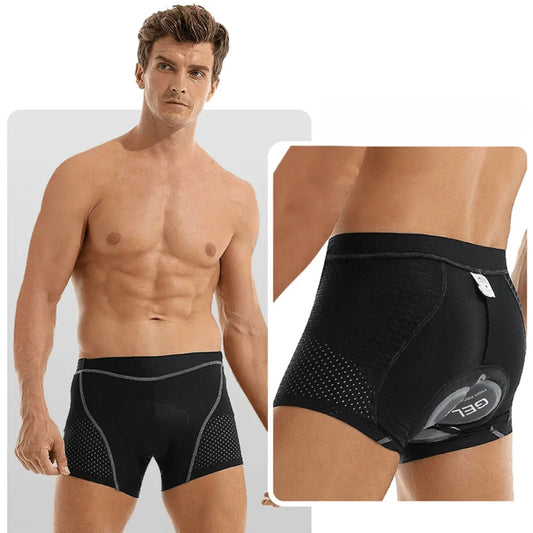
| Short-leg or boxer cut | Leisure rides, touring, rides of an hour or more | Fabric covers the inner thigh, so skin does not rub against the saddle edge; tends to stay in place better |
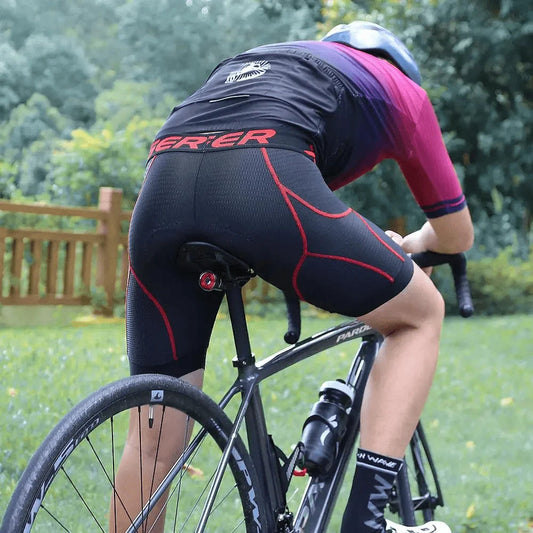
| Liner shorts under baggy shorts | Trail and mountain biking | A padded inner layer with loose, tougher shorts on top for a casual look |
| Full cycling shorts or bibs | Long road rides and training | Not underwear: worn on their own as outer clothing, with a longer leg and more support |
If you mostly ride off-road, our guide to MTB shorts with padding explains how liners and baggies work together.
How thick should the pad be?
More padding is not automatically better. A pad that is too thick for the ride can feel like sitting on a nappy, push your position up and fold over at the edges. As a rough guide:
- Short commutes and spin classes: a slim, flexible pad is enough and stays discreet under clothes. Our guide to padded shorts for spin class covers indoor riding in more detail.
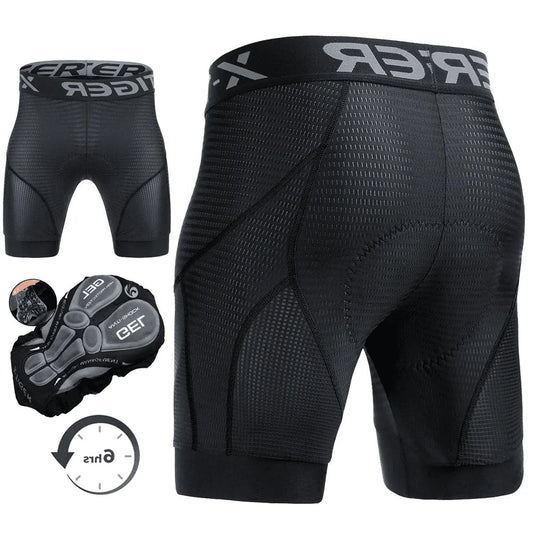
- Rides of one to three hours: a medium pad with gel or multi-density foam gives a good balance of cushioning and freedom of movement.
- Long days and touring: a denser, shaped pad helps, but fit matters even more because small movements are repeated thousands of times.
You will often see terms such as 3D, 4D or 5D. These usually describe a layered, shaped pad rather than a fixed industry standard, so judge a pad by its shape, how it is attached and how it fits, rather than by the number alone.
Getting the size right
Padded underwear should fit like a second skin. If it is loose, the pad slides around and causes the very rubbing you are trying to avoid. If it is too tight, the waistband digs in and the leg openings can leave marks.
- Measure your waist and hips with a soft tape and compare them with the size chart, rather than going by your usual dress size.
- The pad should sit flat against you, with no gap, and cover your sit bones when you lean forward slightly.
- The waistband should stay put without rolling down when you bend.
Because cycling underwear cannot be returned or exchanged for hygiene reasons, it is worth taking two minutes with our cycling underwear size guide before you order.
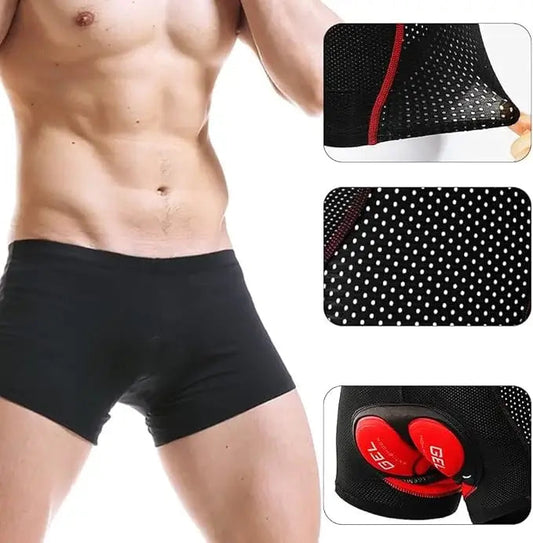
Our pick: GelCush™ cycling underwear (£39.95) is designed specifically for women. It has a shock-absorbing 5D gel pad that cushions sensitive areas, breathable and quick-drying fabric, soft flat seams to limit irritation and an elastic waistband that keeps it in position without digging in. It suits commuters and leisure riders who want comfort under their normal clothes. Sizes run from S to 3XL, so check the size guide and current availability on the product page.
You can browse the full range in our cycling underwear collection. Cycling underwear is part of our Buy 2, get 1 free offer: put three pairs in your basket, mixing any models, and the cheapest one is free. It applies once per order, automatically at checkout. Delivery is free on every order, with tracking; orders are processed within 1–2 business days and usually arrive within 7–10 business days.
How to wear and look after padded underwear
- Wear nothing underneath. A second layer of knickers brings back the seams and damp fabric the pad is meant to replace.
- Put on a clean pair for every ride and change out of it soon after you finish, rather than sitting around in damp fabric.
- Wash after each use, inside out, on a cool cycle. Skip fabric softener, which can clog technical fabrics.
- Air dry away from direct heat rather than tumble drying, to help the pad and elastic last.
- Keep two or three pairs in rotation if you ride several times a week, so there is always a dry one ready.
The saddle matters too
Even a well-shaped pad cannot make up for a saddle that is the wrong width or tilt. If you feel pressure at the front, or you are perched on the edges, read our guide to choosing a women's bike saddle. Small changes to saddle height and angle, together with good underwear and hygiene, often make the biggest difference. If soreness, numbness or skin irritation persists or keeps coming back, see your GP or a physiotherapist.
Frequently asked questions
Do you wear knickers under padded cycling underwear?
No. Padded cycling underwear replaces your normal knickers. Wearing another layer underneath adds seams and holds moisture against your skin, which can cause rubbing.
Can I wear padded cycling knickers under jeans or leggings?
Yes, that is what they are designed for. A slim pad and a brief or short-leg cut are the most discreet under jeans, leggings, skirts or work trousers, which makes them handy for commuting.
Are cycling briefs or cycling boxers better for women?
Briefs are more discreet for short rides in everyday clothes. A short-leg boxer cut covers the inner thigh and tends to stay in place better, so many women prefer it for longer rides.
Is padded underwear the same as cycling shorts?
Not quite. Padded underwear is worn under other clothes, while cycling shorts are outer clothing with a longer leg. For short and medium rides, padded underwear gives much of the comfort without the Lycra look.
How often should I replace padded cycling underwear?
Replace a pair when the pad stays flat after washing, the fabric goes thin or shiny, or the elastic no longer holds. How long that takes depends on how often you ride and how you wash it.