MTB Shorts with Padding: Baggies, Liners and How to Choose
MTB shorts with padding are usually a two-part system: a loose, hardwearing outer short (the "baggies") and a close-fitting padded liner worn underneath, against your skin. Some baggy shorts come with a liner, many don't, and you can always add your own padded undershorts. The liner does the comfort work while the shell copes with brambles, crashes and the café stop, so get the liner right first and then pick the outer short you like.
Why are mountain bike shorts baggy?
Road cyclists wear tight Lycra because it is efficient at speed. Off-road, speed matters less and other things matter more:
- Freedom of movement. On trails you move around the bike far more: standing on the pedals, shifting your weight back on descents, dabbing a foot in a tight corner. A looser cut doesn't pull or restrict you.
- Abrasion resistance. The outer fabric of baggies is usually heavier than Lycra, so a slide on loose gravel or a brush with gorse is less likely to shred your shorts or your skin.
- Room for knee pads. Many riders wear pads on rougher trails, and a longer, wider leg sits over them neatly.
- Pockets and looks. A zipped pocket for a key or a gel, and a casual look you're happy to wear into a trail centre café or the pub afterwards.
What baggies don't do on their own is cushion you. The shell is too loose to hold padding in place, which is exactly why the padding lives in a separate liner.
How a padded liner works
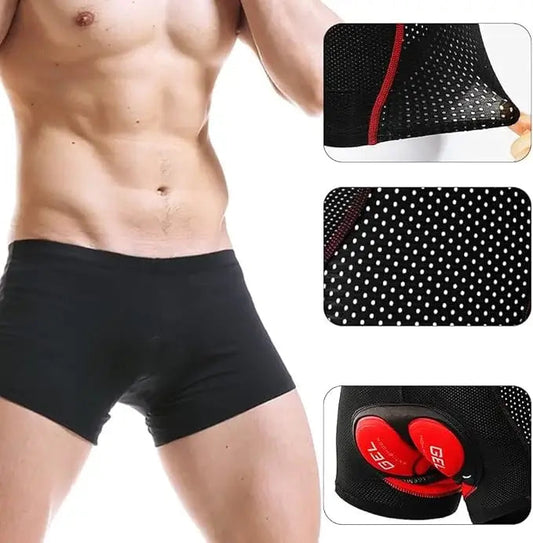
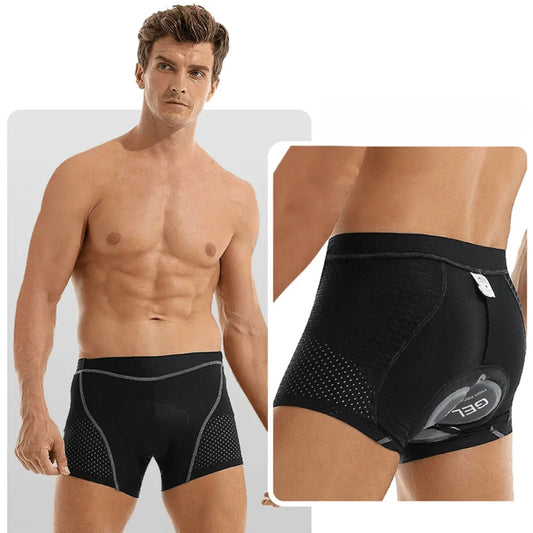
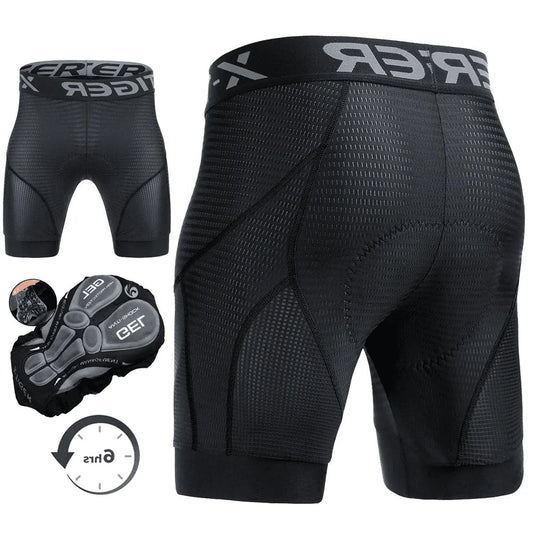
A padded liner (also sold as padded undershorts or cycling underwear) is a snug short with a pad built into the crotch. Because it fits closely, the pad stays where your sit bones meet the saddle instead of shifting around. A good liner does three jobs:
- Spreads pressure across the pad rather than concentrating it on a few hot spots.
- Reduces friction because the liner moves with your skin, so the rubbing happens between fabric and saddle rather than between skin and seams.
- Manages sweat by moving moisture away from your skin, which matters on long, slow climbs and in muggy summer woods.
Liners are designed to be worn without normal underwear underneath. A layer of cotton beneath the pad holds moisture and adds seams exactly where you don't want them. If chafing is already a problem, our guide on how to prevent chafing and saddle sores covers hygiene, chamois cream and what to do if soreness keeps coming back.
Liner included or bought separately?
When you shop for baggy MTB shorts, check whether a liner is included. Both routes work:
- Included liner: convenient, but the pad is often fairly basic. If the liner wears out before the shell, the whole pair can start to feel tired.
- Separate liner: you choose the pad you want, wear it under any baggies you already own and replace it on its own. Owning two or three liners also means one can be in the wash while you ride.
Plenty of riders end up buying a separate liner even when their baggies came with one, simply because they want a better pad for longer rides.
What to look for in a padded MTB liner
| Feature | Why it matters off-road | What to check |
|---|---|---|
| Padding | Trail riding mixes long seated climbs with bumpy sections, so the pad needs to spread pressure and soak up some of the buzz. | Pad type and coverage. Gel pads, such as 5D gel, are a popular choice for longer rides. |
| Breathability | Climbs are slow and sweaty, even on a cool British autumn day. | Mesh panels and quick-drying fabric. |
| Fit | A liner that slips lets the pad move, and that is where rubbing starts. | A waistband that holds without digging in, and legs that stay put. |
| Seams | You move around a lot on a mountain bike, so seams get more chances to rub. | Flat stitching, especially around the pad. |
| Sun protection | Exposed moorland, summer trail centres and uplift days. | Built-in UV protection if you often ride in shorts on sunny days. |
Getting the fit right
A liner should feel close-fitting when you stand and comfortable when you're crouched over the bars. Too loose and the pad moves; too small and the waistband digs in halfway up a climb. Measure your waist and hips and compare them with our cycling underwear size guide before you order. Fit matters even more than usual here because, for hygiene reasons, cycling underwear cannot be returned or exchanged.
Our pick: for most trail riders, the VeloShield™ men's cycling underwear (£49.95, sizes S to 3XL) makes a very good liner under baggies. It has 5D gel padding to absorb impact on rough ground, mesh panels for airflow, a stay-in-place fit and built-in UV protection for sunny days. If you want to keep the cost down, the CycloGel™ (£34.95, sizes M to XXL) also uses 5D gel padding, with breathable, quick-drying fabric and an ergonomic fit that stays in place under any cycling gear.
Matching the liner to your riding
Trail centres and after-work loops
For rides of an hour or three on waymarked trails, a gel liner under a pair of tough baggies is a sound all-round setup. You'll be seated for the fire-road climbs and standing for the technical bits, so you want padding that's comfortable sitting down but doesn't feel bulky when you're up off the saddle.
Long days, bikepacking and big hills
On long rides in the Lakes, the Peak or the Highlands you spend many hours seated, so padding, breathability and a fabric that dries quickly become the priorities. This is where a more premium liner earns its place.
Our pick: if you regularly ride all day, the RideGuard™ men's cycling underwear (£74.95, sizes S to 3XL) is made for long-distance comfort. It combines an advanced 5D gel insert with high-performance breathable mesh, quick-drying fabric and built-in UV protection, so it stays comfortable after hard efforts and on hot days.
Enduro and uplift days
Less seated pedalling, more descending. Padding still helps on the transfers and push-ups, but freedom of movement matters most. Choose a liner that sits flat and doesn't bunch under knee pads, and make sure your baggies are long enough to meet the top of the pads.
Electric mountain bikes
On an e-MTB you often sit down more on climbs because the motor lets you stay seated, and rides tend to be longer. A well-padded liner is worth having even if you used to ride without one.
Buying more than one liner
If you ride a few times a week, it helps to have a rotation so you always have a clean, dry pair. Cycling underwear at Cyclonix is Buy 2, get 1 free: put three pairs in your basket, mixing any models you like, and the cheapest one is free. The offer applies once per order and is taken off automatically at checkout. Delivery is free on every order, with tracking. You can see every model in our cycling underwear collection, and if you want to compare liners with full padded shorts, read our guide to padded cycling shorts for men.
Looking after padded liners
- Wash after every ride: a sweaty pad left in a bag is a breeding ground for bacteria.
- Turn the liner inside out and use a cool wash, following the care label.
- Skip fabric softener, which can clog technical fabrics.
- Air dry rather than putting the pad on a radiator.
- Replace a liner once the pad has flattened or the fabric has gone thin.
Frequently asked questions
Do you wear underwear under padded MTB shorts?
No. A padded liner or padded cycling underwear is designed to sit directly against your skin. Wearing normal underwear underneath adds seams and holds moisture, which is the usual recipe for rubbing and soreness.
Can I wear a padded liner under any baggy shorts?
Yes, as long as the outer short has enough room. Most baggies are cut loosely enough to go over a liner, and you can use the same liner under several pairs. If your baggies came with a removable liner, simply leave it out.
Are baggy shorts or Lycra better for mountain biking?
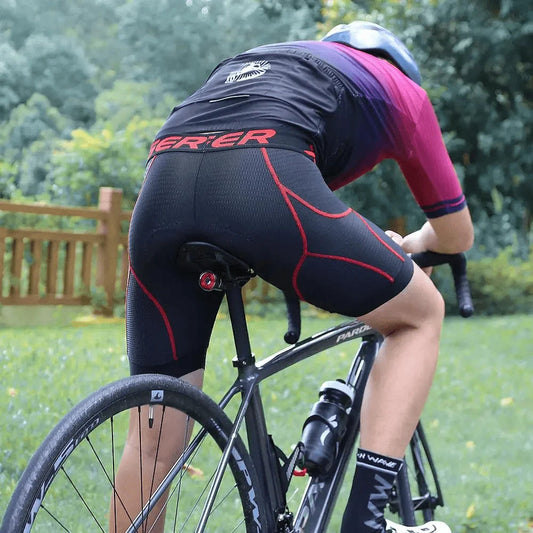
Neither is better for everyone. Baggies with a liner give you abrasion resistance, pockets and a relaxed look, while Lycra shorts are lighter and cooler on long climbs. Many trail riders use a padded liner under baggies as the best of both.
Is padding worth it for short MTB rides?
On a quick 30-minute blast with lots of standing, you may not miss it. Once rides pass an hour, or include long seated climbs, most riders find a padded liner noticeably more comfortable.
How should a padded MTB liner fit?
Snug, with the pad sitting under your sit bones and no loose fabric. It shouldn't slide when you move around on the bike, and the waistband shouldn't dig in. Check your measurements against the size chart before ordering.