Bike Helmet with Visor: Is It Worth It and Who Needs One?
A bike helmet with a visor is worth it if you commute in changeable weather, ride off-road, or often find yourself squinting into low sun or rain. A visor shields your eyes from sun, wind, rain and road spray, so you can see more clearly. Riders on road bikes in a low position often skip a fixed peak, because it can sit in their line of sight, but a detachable visor gives you the choice. Whatever you pick, a correct fit and a clear safety marking come first.
The main types of helmet visor
Peaks
A peak is a short brim at the front of the helmet, typical of mountain bike helmets. It shades your eyes from overhead sun, sunlight flickering through trees and rain from above. Many peaks are fixed or clip on, and some can be adjusted up or down.
Eye-shield visors
An eye-shield visor sits in front of your eyes, a bit like built-in glasses. It is popular with commuters and e-bike riders because it blocks wind, rain and glare without a separate pair of glasses. On many helmets, including ours, it is detachable, so you can ride with or without it.
Full-face helmets
Downhill and enduro riders often use full-face helmets with a chin bar and a peak, worn with goggles. That is a separate category with its own needs, and more than most trail riders require.
Visor or not? It depends on how you ride
| How you ride | Is a visor useful? | Why |
|---|---|---|
| Commuting in UK weather | Yes | Rain, road spray, wind and low winter sun at rush hour |
| Mountain biking and trails | Usually | Sun through trees, mud and rain; a peak or shield keeps your view clearer |
| Road riding and sportives | Sometimes | In a low position a fixed peak can block your view; many riders use sunglasses or a detachable visor |
| Leisure riding and e-bikes | Yes | An upright position and more time exposed to wind and weather |
| Riding at dusk or in the dark | Only with a clear visor | A clear visor blocks wind and rain without reducing what you see |
Choosing a visor tint
If your helmet has an eye-shield visor, the tint makes a big difference to how useful it is across a British year.
- Clear: the all-rounder for dull days, rain and riding after dark, when you want protection from wind and spray without darkening your view.
- Yellow: many riders like a yellow tint in flat, grey light, as it can make the road surface and shadows easier to read.
- Mirrored or iridium: best for bright sun, reflecting glare off wet roads. Avoid dark tints at dusk or at night.
Keep a scratched visor in mind too: scratches scatter light, especially from car headlights, so replacing a worn visor is a simple way to keep your view sharp.
Safety first: what to check on any helmet with a visor
A visor is a comfort and visibility feature. The helmet's job is still to protect your head, so check these points whatever you buy:
- Safety marking: bicycle helmets sold in the UK should carry the EN 1078 marking. Look for it on the label inside the helmet or in the product information before you buy.
- Size: measure your head about 2 cm above your eyebrows and choose a helmet whose size range includes that measurement.
- Fit: the helmet should sit level, about two fingers above your eyebrows, with the straps forming a V just below each ear and the chin strap snug. Our guide on how to fit a bike helmet walks you through it.
- Visor clearance: with the visor on, check that you can see the road ahead comfortably in your normal riding position.
- After a crash: replace a helmet after any significant impact, even if it looks fine.
Helmets are not compulsory for cyclists in the UK, but the Highway Code recommends wearing one, and most riders do.
Visors, lights and being seen
Some visor helmets also include a built-in light. A rear LED on a helmet sits high up, where drivers can see it above parked cars and traffic, which helps you stay visible. It does not replace the white front light and red rear light your bike must have when riding at night. Our guide to the bike helmet with light covers what to look for.
Our visor helmet and replacement visors
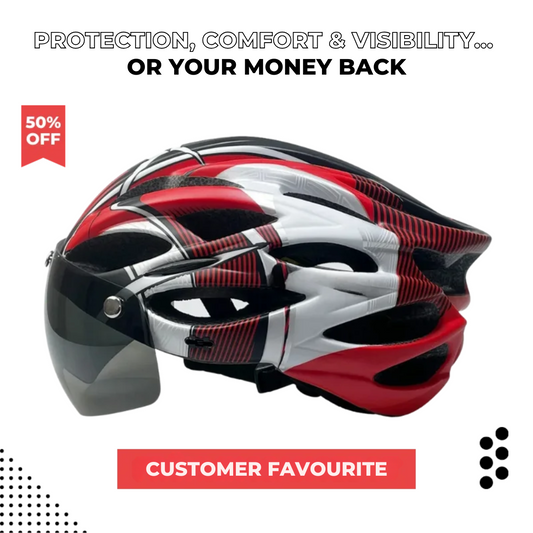
Our pick: the CycloGuard helmet (£74.95) has a detachable visor that shields your eyes from wind, sun and rain, 24 air vents to reduce heat build-up, an integrated rear LED for visibility after dark and an impact-absorbing shell. It comes in size M/L (54–62 cm) and is designed for road cycling, mountain biking and commuting. As well as black, it is available in red, grey, white, and black and white. As with any helmet, check the label and product information for the safety marking.
Our pick: to change tint or replace a scratched visor, the CycloGuard replacement visor (£7.95) is made from impact-resistant polycarbonate and comes in Transparent White, Transparent Yellow and Iridium Gold. It is designed specifically for the CycloGuard helmet and is quick to attach or remove, so you can keep a clear one for winter and a gold one for summer.
You can see the full range in our bike helmets with visor collection. Delivery is free on every order, with tracking, and helmets can be returned within 30 days if unused, with return postage paid by you. If you are still weighing up options, our guide to the best bike helmet in the UK compares the main helmet types.
Looking after a visor
- Rinse off mud and grit with water before wiping, so you do not grind it into the surface.
- Clean with mild soapy water and a soft cloth; avoid solvents and rough paper towels.
- Store the helmet so the visor is not resting on hard surfaces.
- Replace the visor when scratches start to affect your view.
Frequently asked questions
Are helmets with visors safe?
The visor itself is a comfort and visibility feature; the protection comes from the helmet. Whatever model you choose, check for the EN 1078 marking, choose the right size and adjust the straps properly. Make sure the visor does not limit your view in your normal riding position.
Do road cyclists use visors?
Fewer road cyclists use fixed peaks, because a low riding position can push a peak into their line of sight, and many prefer cycling glasses. A detachable visor is a good compromise if you ride on the road and also commute or ride trails.
Is a visor helmet good for commuting?
Yes. A visor helps with rain, road spray, wind and low winter sun, which are everyday conditions on UK commutes. Choose a clear tint for darker mornings and evenings, and remember a helmet light does not replace your bike lights.
Can you wear glasses with a visor helmet?
With a peak, glasses are rarely a problem. With an eye-shield visor, it depends on the shape of your frames and the helmet, so try them together when the helmet arrives. If it does not suit you, unused helmets can be returned within 30 days.
Can I replace the visor on my helmet?
On many detachable designs you can. For the CycloGuard, replacement visors cost £7.95 and come in three tints, so you can swap a scratched visor or change it with the seasons.