Best Saddle for Long Rides: How to Choose a Comfortable Seat
The best saddle for long rides is one that supports your sit bones, suits how upright you sit on the bike, and still feels comfortable after several hours rather than several minutes. For road and endurance riding, that usually means a slimmer, supportive saddle; for upright touring and leisure riding, a wider, more cushioned one often works better. How you set the saddle up matters as much as which one you buy.
Why long-distance comfort is different
A very soft saddle often feels great in the shop or on a short ride. Over hours, though, your sit bones sink through the padding and the pressure moves onto soft tissue, which is where numbness and soreness start. Soft padding can also hold heat. That is why many long-distance riders prefer a saddle with supportive, medium-firm padding and let their padded shorts do part of the cushioning.
The other big factor is your riding position. The lower and more stretched out you sit, the more of your weight goes through your hands and feet, and the narrower the saddle you can get away with. The more upright you sit, the more weight the saddle carries, and the more width and cushioning you need.
Match the saddle to your riding position
| Riding position | Typical bikes | Saddle that tends to suit | Our models |
|---|---|---|---|
| Low and stretched | Road, endurance, sportives | Slim, sporty shape with supportive padding | CycloSport, VeloxSeat |
| In between | Hybrid, gravel, light touring | Medium width with more cushioning | SiliconRide, CycloSoft |
| Upright | City, comfort, touring and many e-bikes | Wide seat, generous padding, springs | MaxiComfort, UrbanSoft |
What to look for in a long-distance bike seat
Width and your sit bones
Your sit bones are the two bony points you feel when you sit on a hard chair. The saddle needs to be wide enough to support both of them. A simple way to estimate the distance: sit on a piece of corrugated cardboard on a low step, lean forward slightly, then measure between the centres of the two dents. Upright riders generally need a wider saddle than that measurement suggests; low road positions can use something closer to it. If you sit very upright, our guide to the wide bike seat explains when extra width helps.
Shape and pressure relief
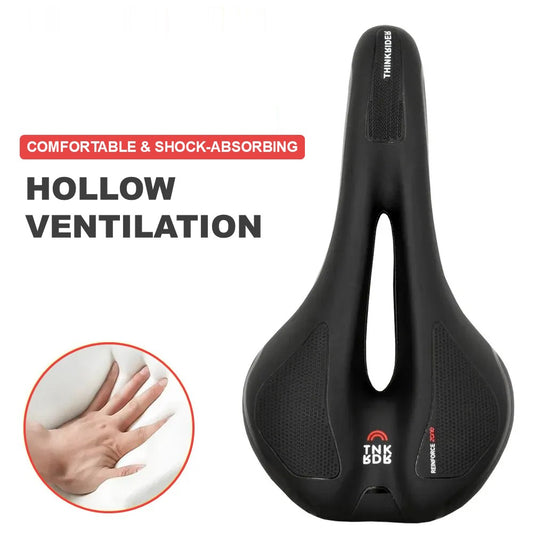
Flatter saddles let you move around and change position, which many riders like on long days. A central channel or cut-out aims to reduce pressure on soft tissue. If numbness is your main issue, read our guide on numbness from a bike seat. Women's anatomy differs, and our women's bike saddle guide covers what to look for.
Padding: foam, memory foam, gel or silicone
Firmer foam keeps its shape over long distances. Memory foam moulds to you and suits relaxed, upright riding. Silicone and gel cushion vibration and feel soft. None of them is right for everyone; what counts is that the padding supports your sit bones without letting you sink.
Suspension and springs
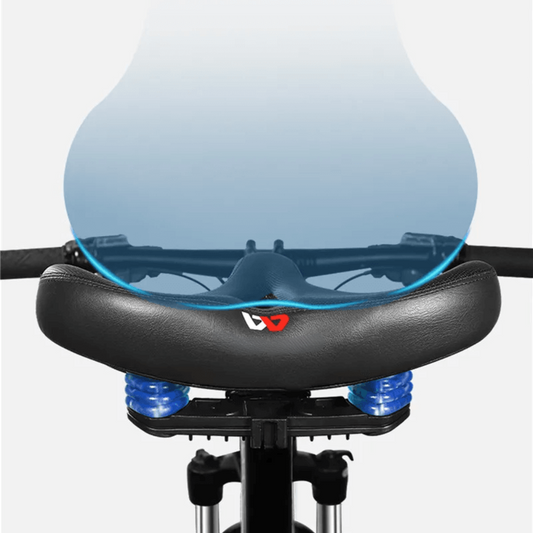
Springs or built-in shock absorbers take the edge off potholes and rough surfaces, which is useful on long rides on poor roads, towpaths and gravel. They matter most when you sit upright, because more of your weight is on the saddle.
Rails and compatibility
Most seat posts clamp standard 7 mm round rails. Check yours before you order, especially on older or unusual bikes.
Our picks for long rides
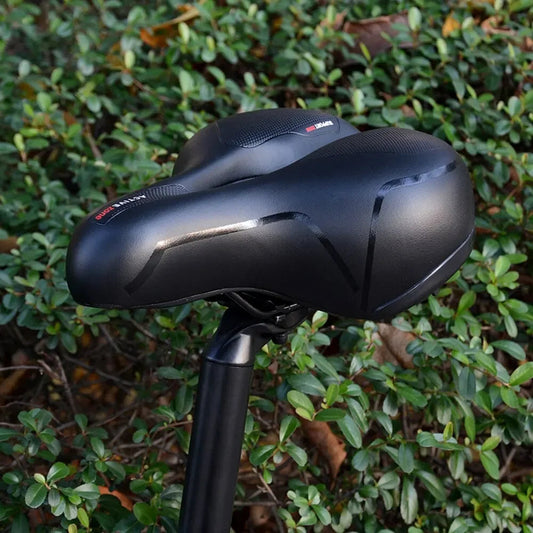
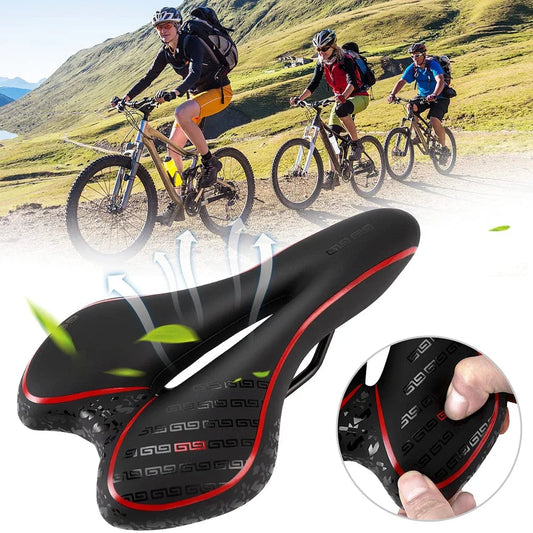
Our pick: for road and endurance riding, the CycloSport saddle (£69.95) has a slim, sporty 280 x 150 x 40 mm shape that supports a natural pedalling motion, ergonomic foam cushioning for pressure relief and built-in shock absorbers for rougher surfaces. The breathable, water-repellent PU leather cover helps on long, warm or wet rides. It fits seat posts with 7 mm rails.
Our pick: for upright touring and relaxed long days, the MaxiComfort saddle (£69.95) is extra wide at 325 x 260 x 105 mm, with a wide memory foam zone and a dual-spring shock absorption system. If you want something in between, the SiliconRide saddle (£49.95) uses ultra-soft silicone padding with shock absorption and a non-slip surface, and fits all standard bike types.
You can compare every model, including the CycloSoft (£44.95), VeloxSeat (£49.95) and UrbanSoft (£59.95), in our bike saddle collection. Delivery is free on every order, and saddles can be returned within 30 days if unused, with return postage paid by you.
Set it up properly
Even the right saddle will feel wrong if it is badly adjusted. Before any long ride:
- Height: with your heel on the pedal at the bottom of the stroke, your leg should be almost straight. When you pedal normally, your knee keeps a slight bend.
- Tilt: start with the saddle level. Tip the nose down only slightly if you feel pressure at the front.
- Fore and aft: slide the saddle along its rails so you sit on the widest part, not perched on the nose.
- Small changes: adjust a few millimetres at a time and give each change a couple of rides.
- Carry a multi-tool on the first long ride with a new saddle, so you can fine-tune on the road.
A new saddle also takes time. Many riders need several rides to judge a saddle properly, so build up distance rather than starting with your longest route.
Saddles and back pain on long rides
Back discomfort on long rides often comes from position rather than the saddle alone: a reach to the handlebars that is too long, a saddle at the wrong height, or tired core muscles late in the day. A shock-absorbing saddle can make rough roads feel smoother, and a wider seat with springs spreads the load for upright riders, which many find more comfortable. Adjusting handlebar height and reach, and taking short breaks to stretch, also help. If back pain persists or comes back after riding, see a GP or physiotherapist, and consider a professional bike fit.
Do not forget what you wear
The saddle is only half the contact point. Padded shorts or padded underwear cushion the areas the saddle cannot and reduce friction over long distances. Our guide to the best padded cycling shorts explains how to pair the two.
Frequently asked questions
Is a soft or firm saddle better for long rides?
For long rides on a road or endurance bike, many riders find a supportive, medium-firm saddle more comfortable than a very soft one, because soft padding lets the sit bones sink. On upright bikes, where more weight sits on the saddle, extra cushioning and springs make more sense.
How long does it take to get used to a new saddle?
It varies, but give it several rides before deciding. Start with shorter routes and make small adjustments to height and tilt. Persistent numbness or sharp discomfort means the saddle or its setup is not right for you.
What is a good saddle for touring?
For touring with an upright position, a wider saddle with good padding and springs, such as the MaxiComfort, tends to suit. Tourers who ride in a lower position often prefer a medium-width saddle that lets them move around.
Can I put a wide saddle on a road bike?
You can, but in a low road position a very wide saddle may rub the inside of your thighs. Road riders usually do better with a slimmer shape. A wide saddle suits road bikes set up for a more upright position.
Can a new saddle help with back pain?
A saddle that supports your sit bones and absorbs vibration may help, especially on rough roads, but back pain often comes from your overall position. If the pain continues, see a GP or physiotherapist and consider a bike fit.