Best Bike Saddle for Commuting: Choosing a Comfy City Seat
The best bike saddle for commuting is the one that matches how you sit on your bike. If you ride upright on a city bike, hybrid or e-bike, you will usually be more comfortable on a wider, well-padded seat that supports your sit bones; if you lean forward on a road bike or fast flat-bar commuter, a narrower shape works better. Because most commuters ride in everyday clothes without padded shorts, extra cushioning and a water-repellent cover are worth having. Choose the width first, then the padding, weather resistance and fit.
Start with your riding position
Your posture decides where your weight goes. Sitting upright puts most of it on your sit bones and very little on your hands, so the rear of the saddle needs to be broad and supportive. Leaning forward rotates the pelvis, moves weight towards the front of the saddle and brings your thighs closer together, so a wide seat starts to rub. This table is the quickest way to narrow down your choice:
| Riding position | Typical bike | Saddle shape | Padding |
|---|---|---|---|
| Upright, back nearly vertical | Dutch-style city bike, step-through, many e-bikes | Wide, rounded rear, often with springs | Generous foam or gel |
| Semi-upright, slight lean | Hybrid, trekking bike | Medium to wide, contoured | Medium |
| Forward lean | Road bike, fast flat-bar commuter | Narrower, slimmer nose | Firmer and thinner |
If you are not sure how wide you need to go, our guide to choosing a wide bike seat explains how to measure your sit bones at home.
What makes a good commuter saddle
Support for short rides in normal clothes
A commute is often 15 to 45 minutes in jeans or work trousers, which have thick seams right where you sit. Memory foam or gel padding softens that contact. Very soft padding is not always better on longer rides, because your sit bones can sink in and push foam into soft tissue, but for typical city distances a cushioned saddle is a sensible choice.
Weather resistance
Your bike may spend all day locked up outside, so a water-repellent cover that does not soak up rain is a real advantage in British weather. A cheap trick many commuters use is to slip a shower cap or carrier bag over the saddle when parked.
Shock absorption
Potholes, speed bumps, kerbs and cobbles send jolts straight through the saddle. Springs or a shock-absorbing base take the edge off, which upright riders notice most because more of their weight is on the seat.
Grip and ventilation
A non-slip surface stops you sliding forward when you brake at junctions, especially in wet trousers. Airflow channels help on warm days when you arrive at work and would rather not be sweaty.
Fit to your bike
Most saddles clamp to the seat post using two rails. Many standard posts take 7 mm round rails, so check this on your current saddle or seat post before you buy.
Our commuter saddles compared
All three saddles below are built for comfortable everyday riding. Here is how they differ, using the details from each product page:
| Saddle | Price | Size | Padding and support | Stand-out features |
|---|---|---|---|---|
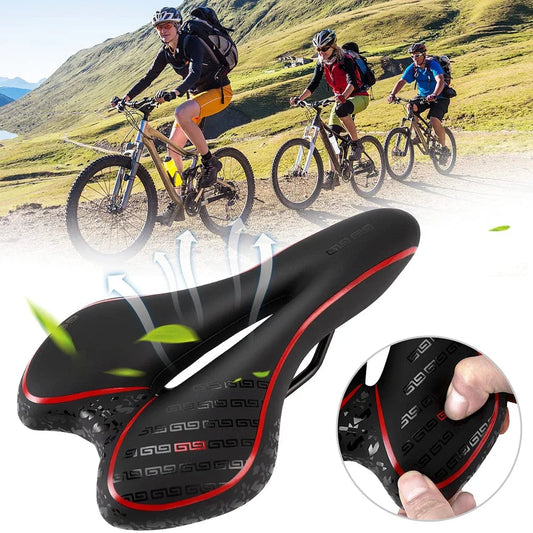
| UrbanSoft™ | £59.95 | Not listed | Soft padding, pressure-relieving ergonomic shape | Water-repellent, grippy surface; integrated airflow channels; fits all standard bikes |
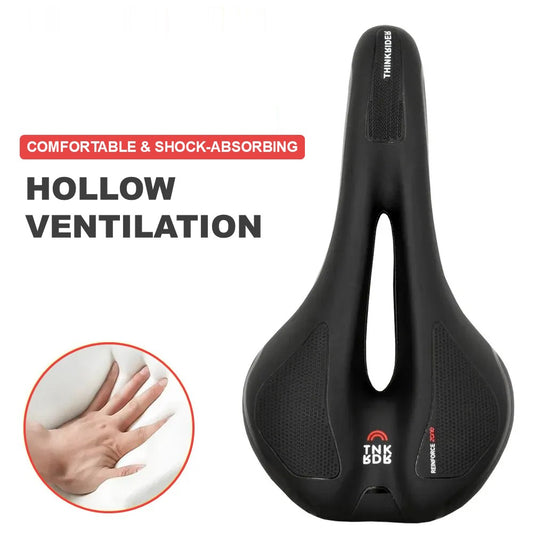
| CycloSoft™ | £44.95 | 250 x 200 x 90 mm | Memory foam under the sit bones, shock-absorbing structure | Non-slip surface; suits town riding, weekend trips and e-bikes; 7 mm rails |
| MaxiComfort™ | £69.95 | 325 x 260 x 105 mm | Wide memory foam zone, dual-spring shock absorption | Extra-wide seat; breathable, water-repellent PU leather; 7 mm rails |
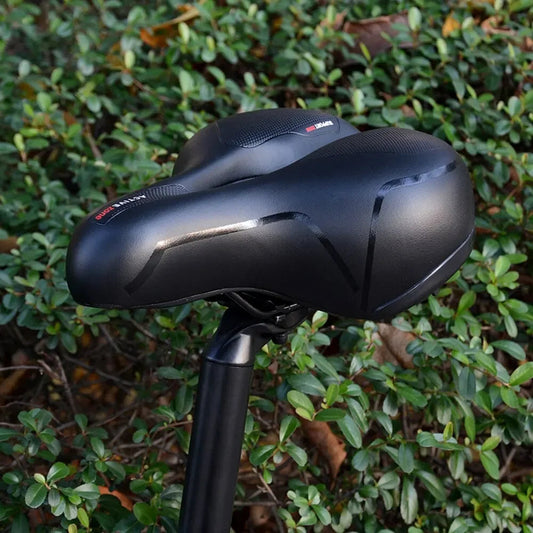
Our pick: for most city and hybrid commuters, the UrbanSoft™ comfort city saddle (£59.95) is designed for exactly this job: soft padding, a pressure-relieving shape, a water-repellent grippy surface for wet days and airflow channels for warmer rides. If you want memory foam on a smaller budget, the CycloSoft™ saddle (£44.95) adds a shock-absorbing structure and a non-slip top, and works well on e-bikes too.
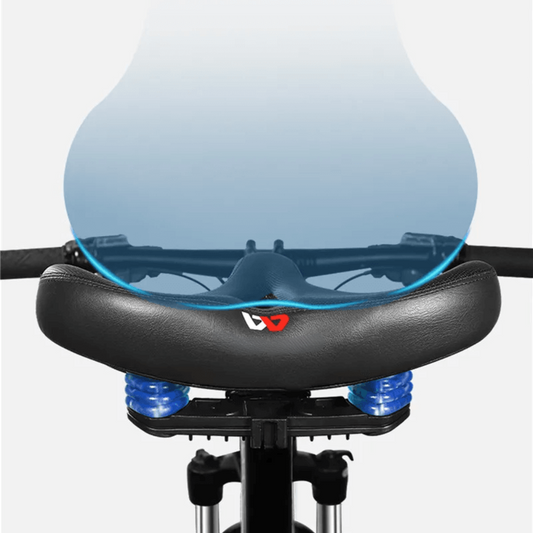
Our pick: if you sit fully upright on a Dutch-style bike or cruiser, or simply want the most cushioned seat for bumpy roads, the MaxiComfort™ extra-wide saddle (£69.95) spreads your weight across a 260 mm wide memory foam seat and uses dual springs to soak up bumps. It is less suited to riders who lean forward, as the width can get in the way of the pedalling stroke.
You can compare every model in our bike saddle collection. Delivery is free and tracked on every order; orders are processed within 1–2 business days and usually arrive within 7–10 business days. If a saddle is not right, you can return it unused within 30 days, with return postage paid by you.
How to set up your new saddle
- Height: sit on the saddle and put your heel on the pedal at the bottom of the stroke. Your leg should be almost straight. A deeper, more padded saddle sits higher than a thin one, so lower the seat post to make up the difference.
- Angle: start with the top of the saddle level. If you feel pressure at the front, try a very slight nose-down tilt; too much and you will slide forward onto your hands.
- Position: centre the clamp on the rails to begin with, then move it a few millimetres forward or back if you feel too stretched or cramped.
- Tighten: do the clamp bolt up firmly, to the torque printed on it if there is one, and check it again after your first few rides.
- Give it time: allow a week or two of regular riding before deciding. Your body needs time to adapt to a new shape.
Comfort beyond the saddle
The saddle is only part of the picture. Padded underwear worn under your work clothes adds a layer of cushioning and wicks sweat on the way in; see our guide to cycling underwear for men. Carrying a heavy backpack also shifts weight onto your seat and shoulders, so moving your phone, keys and wallet into a handlebar bag can make the ride feel lighter. If you get tingling or numbness after rides, our guide to numbness from a bike seat covers the usual causes. If symptoms persist or keep coming back, see your GP or a physiotherapist.
Frequently asked questions
What type of saddle is best for a city bike?
City bikes put you in an upright position, so a wide saddle with a rounded rear, generous padding and some shock absorption usually suits them best. Look for a water-repellent cover too, since city bikes are often parked outside.
Is memory foam or gel better on a commuter saddle?
Both can work well. Memory foam moulds to your shape and spreads pressure, while gel is good at softening vibration. For short and medium commutes, the overall shape and width matter more than the type of padding.
How do I keep my saddle dry when it is parked outside?
Choose a water-repellent cover, and slip a shower cap or plastic bag over the saddle while you are at work. Wipe it down before you set off if it has been raining.
Will a new saddle fit my bike?
Most adult bikes use a seat post clamp that takes standard rails. The CycloSoft™ and MaxiComfort™ suit seat posts that take 7 mm rails, and the UrbanSoft™ is designed to fit all standard bikes. Check your current saddle rails if you are unsure.
How long does it take to get used to a new saddle?
Most riders settle in within a week or two of regular rides. If it still feels wrong after that, check the height and angle before deciding the saddle itself is the problem.